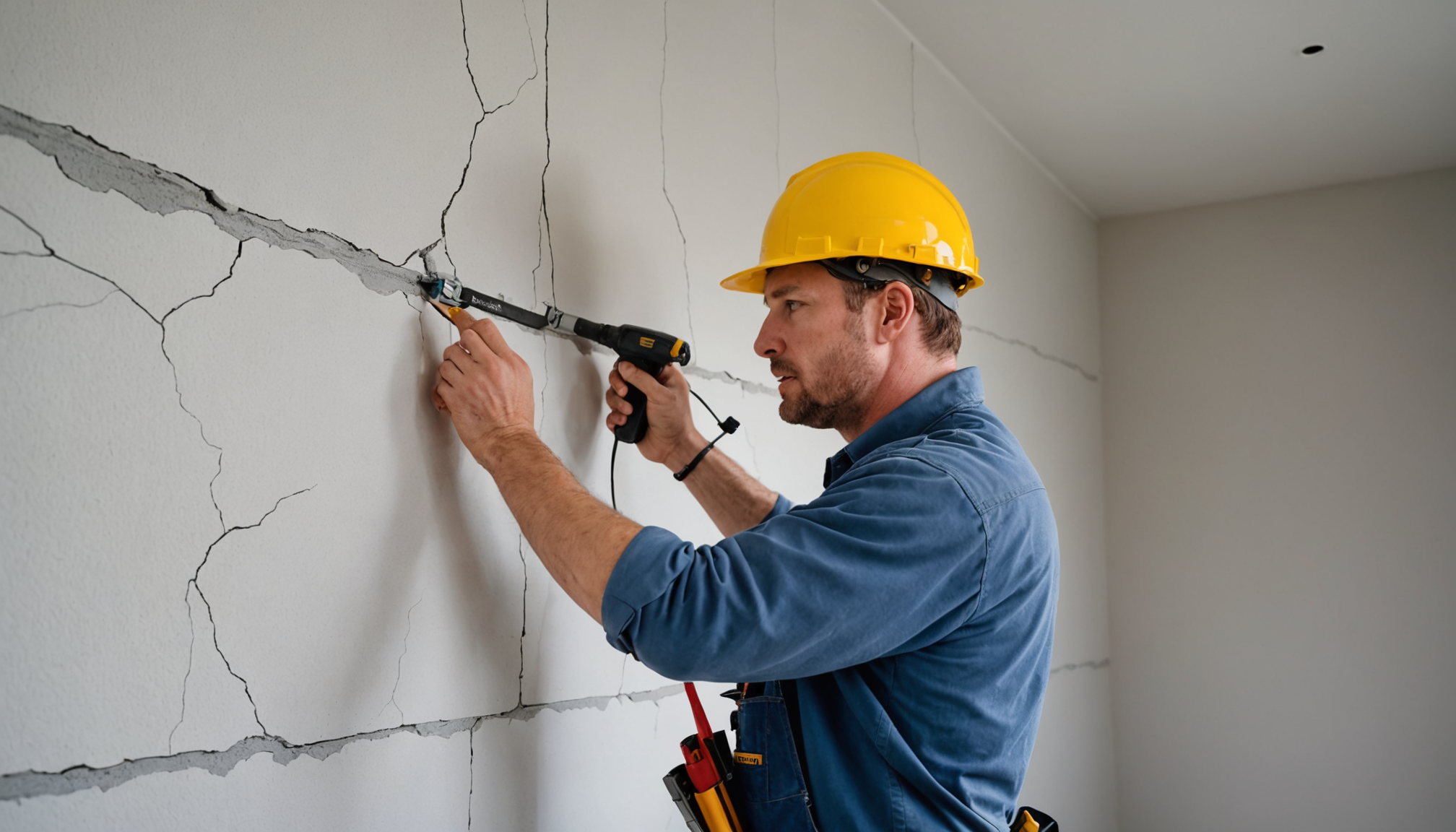
Drywall Cracks: Which Ones Are Normal (And Which Ones Should Worry You)
You walk past the hallway one morning and there it is — a crack in the wall you're pretty sure wasn't there last week. Before you panic (or before you ignore it and pretend it's not happening), take a breath. Most drywall cracks are completely harmless. But a handful of them are your house's way of waving a red flag.
Here's how to read the difference.
---
First, Why Do Walls Crack at All?
Drywall is basically compressed gypsum sandwiched between two layers of paper. It's sturdy, but it doesn't flex. And houses do flex — they expand and contract with temperature and humidity, wood framing dries out over time, and the ground beneath a foundation shifts gradually over years.
Add in the occasional slammed door, a heavy piece of furniture moving across the floor above, or a wet season followed by a dry one, and you've got plenty of reasons for hairline cracks to show up. The vast majority of them are cosmetic. The question is knowing which ones aren't.
---
The Harmless Ones (Relax)
Hairline Cracks Along Seams
Drywall sheets are taped and mudded together at their seams. Over time, that tape can loosen slightly or the mud can shrink, leaving a thin crack right where two panels meet. You'll usually see these:
- Running horizontally across a wall
- Along the ceiling where it meets the wall
- Around the corners of door and window frames
These are extremely common, especially in homes less than 10 years old that are still settling, or in homes that go through big seasonal humidity swings. A hairline crack you can barely fit a fingernail into is almost always cosmetic.
Cracks in Corners
Inside corners — where two walls meet or where a wall meets the ceiling — crack all the time. The tape in those spots gets pulled in two directions whenever the house moves. Again, very normal.
Thin Cracks Around Door and Window Frames
The framing around openings is under constant stress from foot traffic, opening/closing, and building movement. Small diagonal cracks shooting from the corners of door or window frames (sometimes called "nail pop" cracks or stress cracks) are typical, especially in older homes.
---
The Ones Worth Watching
Cracks Wider Than 1/4 Inch
Pull out a pencil. If the crack is wide enough to slip a pencil tip into, it's worth paying attention to. Wide cracks suggest more significant movement than simple settling.
Cracks That Run Diagonally at 45 Degrees
A diagonal crack — especially one that starts at the corner of a door or window and runs at roughly 45 degrees — can signal foundation movement or differential settling (where one part of the foundation sinks more than another). One crack like this alone isn't necessarily an emergency, but if you've got multiple diagonal cracks in different rooms, that's a pattern worth investigating.
Cracks That Go Through Both the Drywall and the Surrounding Trim
If a crack has migrated into the baseboard, crown molding, or door casing, it's telling you the movement is more serious than surface-level. Finishes crack after structure cracks — so this is a layered symptom.
Cracks Accompanied by Sticking Doors or Windows
This is the big one. If you're noticing a new crack and a door that used to swing freely now sticks or won't latch, that combination points to real structural movement. The door frame is racking — being pushed out of square — because something underneath is shifting.
Horizontal Cracks in Basement or Crawl Space Walls
If the crack is in a concrete block or poured concrete foundation wall and runs horizontally, that's a different animal entirely. Horizontal cracks in foundation walls can indicate lateral soil pressure — meaning the earth outside is pushing in. That needs a structural engineer's eyes, not a tube of caulk.
---
How to Monitor a Crack Before Doing Anything
If you're unsure whether a crack is actively growing, here's a simple trick: use a pencil to mark the ends of the crack and write today's date next to it. Check back in 30, 60, and 90 days.
A crack that hasn't moved is old and stable. A crack that's getting longer or wider is active, and active cracks need to be diagnosed before they're patched — because patching over an active crack will just crack again within months.
---
How to Patch the Harmless Ones Yourself
For hairline and small cosmetic cracks, here's the basic process:
1. Widen the crack slightly with a putty knife or utility knife so the patching compound has something to grip. A V-shaped groove works well.
2. Apply joint compound (pre-mixed "all-purpose" compound from any hardware store works fine). Feather it out a couple inches on each side.
3. Let it dry fully — at least 24 hours, more in humid weather.
4. Sand smooth, then prime before painting. Skipping the primer is the most common DIY mistake; unprimed compound will flash through your paint.
For longer cracks along seams, you may need to apply a strip of paper drywall tape over the compound before it dries for extra reinforcement.
When to call a pro: If the crack is more than a foot long, if it keeps coming back after you patch it, or if it's paired with any of the warning signs above — sticking doors, diagonal runs, or wide gaps — it's worth having someone come take a look before you spend time patching something that'll just reopen.
---
The Bottom Line
The short version: thin, horizontal, along a seam or corner = normal. Wide, diagonal, growing, or paired with sticking doors = investigate.
Most of the cracks in your walls are just your house doing what houses do. A little joint compound, some sanding, and a fresh coat of paint and you'd never know they were there. But the warning-sign cracks are worth catching early — a foundation issue addressed in 2026 is a fraction of the cost of one addressed in 2030 when it's gotten worse.
When in doubt, a quick professional assessment costs almost nothing compared to what ignoring the wrong crack can turn into. We offer free estimates — so if something's been bugging you, there's no reason not to get a second set of eyes on it.